
Try the method on paper
How to track potty independence.
Start with one extra detail: what prompted the trip? A small, consistent log can make that visible without giving your child a score.
No signup. Print the sheet or use the blank CSV in your spreadsheet. These pages do not ask you to enter or upload your child’s records.
Six visits. More than one story.
The fictional log below contains six successful visits. If you only count toilet outcomes, they look the same. Recording the prompt source shows what started each one.
| Recorded visit | What started it? | Outcome |
|---|---|---|
| Monday, after breakfast | Watch reminder | Pee in potty |
| Monday, during play | Child asked before a reminder | Pee in potty |
| Monday, before leaving home | Caregiver prompt | Pee in potty |
| Wednesday, after breakfast | Watch reminder | Pee in potty |
| Wednesday, during play | Child headed to potty before a reminder | Pee in potty |
| Wednesday, afternoon | Not recorded | Pee in potty |
Read the counts without filling in the gaps.
Two of six recorded visits were child-initiated. Two were watch-prompted, one was caregiver-prompted, and one had no prompt source recorded. Those counts describe only this example’s entries.
If you exclude the unknown source, you could instead say “two of five visits with a known source.” That is a different denominator. Keep unknown entries visible so a cleaner-looking number does not hide incomplete information.
What happened on Tuesday? We do not know. There are no entries. That does not mean the child had no visits or no accidents.
All six example outcomes are “pee in potty,” but this is not evidence that either day was accident-free. The example does not cover every event or hour. In your own log, include accidents and identify unrecorded periods.
Use a log the whole household can understand.
- Agree on the prompt labels. Watch, Child, or We asked. Use “not recorded” when you do not know; do not infer what the child felt.
- Record the event, not just the successes. Include time, pee/poop, toilet/accident, and brief context. Keep unnecessary personal details off the sheet.
- Note the coverage. Mark the hours or parts of the day recorded, gaps, and the physical-watch setting if relevant.
- Review observations together. Compare similar periods and routines. A percentage alone is not a decision to stop reminders.
Read more about what to observe before moving beyond a potty watch →
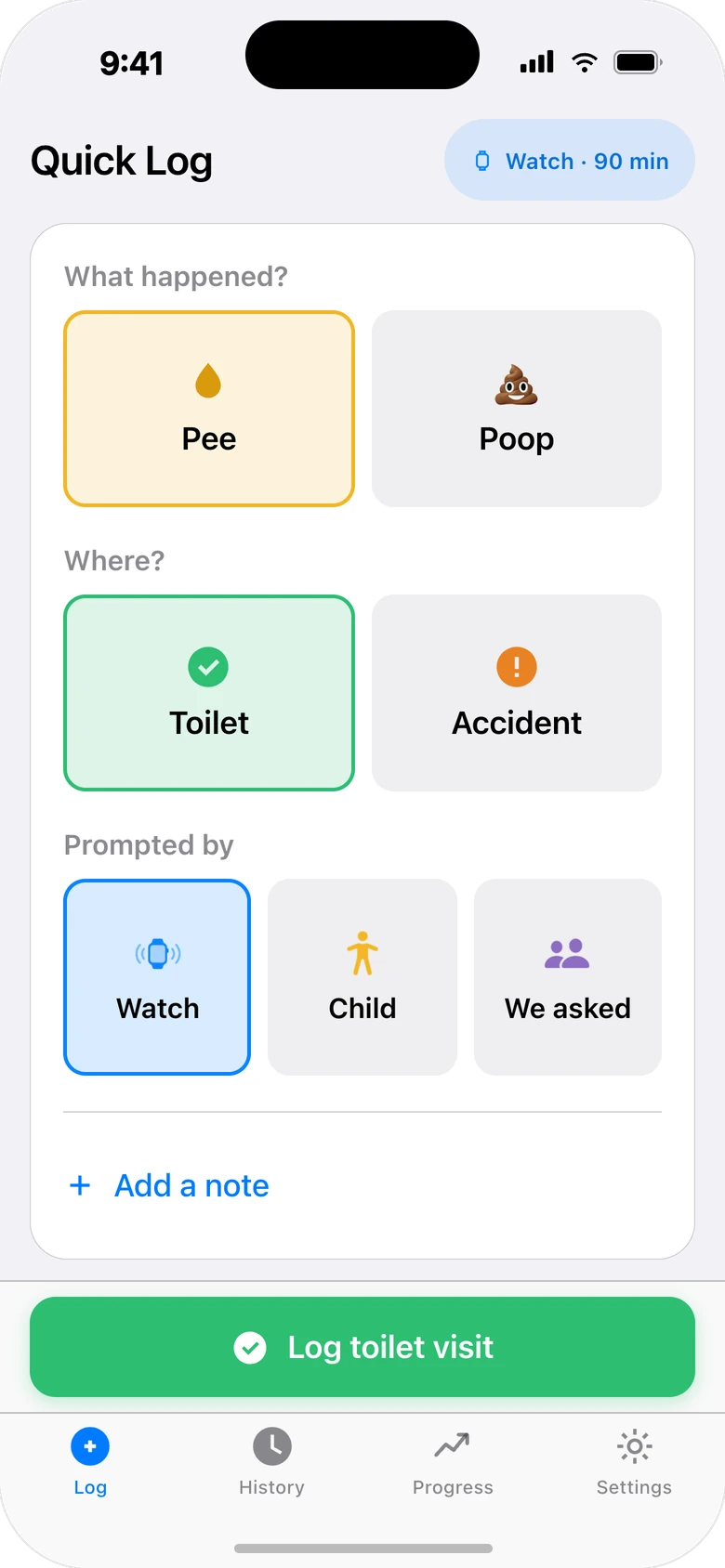
Keep a paper copy—or a shared history.
The printable sheet is enough to try this observation method. Store completed sheets and spreadsheet files privately. If keeping everyone’s entries together becomes cumbersome, the app offers a household history with caregiver attribution.
The example and printable sheet were created by Potty Watch Tracker to explain recordkeeping. They are not the app’s progress algorithm, a readiness test, or a prescribed training routine.